
Last updated on August 29th, 2017 at 10:35 am
 Skin cancer is the most common form of cancer in the UK, with 2,500 fatalities every year and rising, yet in the UK the dangers of sun exposure and its effects are often overlooked.
Sun Awareness aims to highlight the dangers of sunburn and excessive tanning, and to discourage people from using sunbeds, as most cases of skin cancer are caused by exposure to ultraviolet (UV) light.
Sun damage
Sun damage can happen within 10 mins but it can take up to 12 hours to show the full extent of the damage caused by the sun. The skin is the largest organ in the body and tan is the skin’s response to injury.
There are three types of skin cancer:
- malignant melanoma
- squamous cell carcinoma
- basal cell carcinoma
Whilst it is not always preventable, the commonest cause of skin cancer is too much exposure to ultraviolet (UV) light from the sun or from sun beds, but you can reduce your chances of developing it by limiting your exposure to UV light.
Reducing the risk
There are some easy things you can do to reduce your exposure to UV light and reduce your risk of skin cancer.
- Wear sun screen of at least SPF15. Apply at least 20 minutes before going out and apply frequently; at least every two hours
- Wear a wide brimmed hat to protect your face
- Stay out of the sun when the sun is at its strongest, typically between 11am and 3pm
- Cover up exposed skin
- Don’t let your skin burn
- Wear UV protective sunglasses to protect your eyes
Risk factors
Anyone can develop skin cancer, and having a risk factor does not mean that you will get the disease.
Factors that may increase your risk of skin cancer include:
- fair skin
- a history of sunburns
- excessive sun exposure
- large number of moles
- precancerous skin lesions
- a family history of skin cancer
- a personal history of skin cancer
- a weakened immune system
- exposure to radiation
Skin cancer risk by skin type
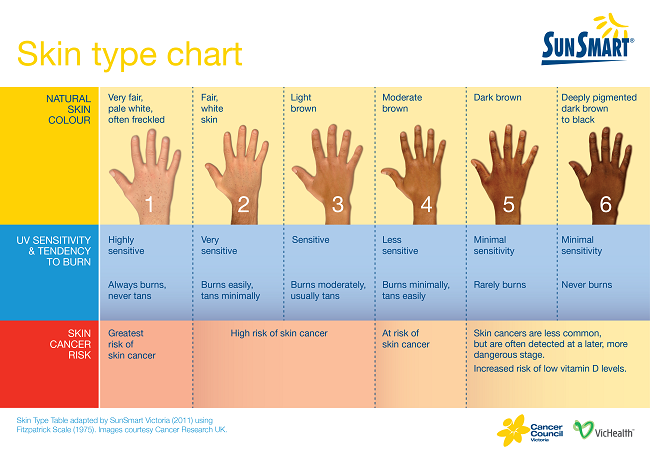
Check your skin
Statistics show that skin cancer kills seven people every day. Fortunately if found early enough skin cancer is often curable.
Regular checks on moles and skin growths is important and if changes in moles and skin growth are seen you should make an appointment to see your GP to get it checked out.
You should see your doctor if you have moles that are:
- larger than most moles
- smudgy and irregular edges
- uneven in colour
- may have some pinkness
Early diagnosis can dramatically improve the chances of beating skin cancer
How can we help
Unfortunately, sometimes a medical mistake can also result in the spreading of the disease. It may be the case that there is a failure by the healthcare professional to recognise the history given to them, or the importance of symptoms, resulting in the failure to investigate the condition or to consider and follow the NICE guidelines 7-point checklist appropriately for urgent referral, which could result in the need for more extensive and invasive treatment. Or it may be the case that as a result of the failure to promptly diagnose the disease, by the time the diagnosis of cancer is made, it may not possible to receive effective treatment, or even palliative care.
Here at Graysons we recognise the devastating, and in some cases fatal, effect that a delayed diagnosis of cancer can have. We understand the importance of compensation to you as it can greatly improve quality of life for you and your family and provide the care and security that is needed.
If you would like to talk to a member of our specialist team then please contact us for a confidential and free discussion today.
Further information
http://www.britishskinfoundation.org.uk/SkinInformation/SkinCancer.aspx
http://www.bad.org.uk/for-the-public/sun-awareness-campagin
http://www.nhs.uk/Conditions/Cancer-of-the-skin/Pages/Introduction.aspx
You can also read more about failure to diagnose or delayed diagnosis of cancer on our web pages.

